Facial surgery in Alicante
Reshaping the nose by working on the bone with an ultrasonic instrument, the piezotome, which cuts and files in a controlled way without a hammer or chisel. Before suggesting it, Dr Navarro assesses each nose to decide whether it is the right technique for you.
Anaesthesia
General
Duration
2 to 3 hours
Hospital stay
Day case or one night
Nasal splint
About 7 days
Back to work
Around 2 weeks
Final result
At around 12 months
Approximate figures. They are confirmed at your consultation for each case.
The technique
Rhinoplasty is surgery that changes the shape of the nose and, where needed, also improves breathing. In the ultrasonic version, the bony part (the bridge and the side walls) is shaped with a piezotome: an instrument that vibrates at an ultrasonic frequency and acts on bone, while the nasal lining (mucosa) and the soft tissues are much less affected.
This means a hump can be filed down or the nasal bones narrowed with planned cuts (osteotomies) under direct vision, instead of fracturing them with a hammer and chisel. The tip and the septum, which are made of cartilage, are still shaped with the usual rhinoplasty techniques.
It is still surgery, with a recovery period and risks. Ultrasound gives control over the bone; the result depends above all on an accurate diagnosis and realistic planning.

Suitability
If the change you want is only in the tip or the cartilage, the ultrasonic part may add nothing. It is also important that your nose has finished growing (usually from the age of 17 or 18) and that you have realistic expectations about the result.
At your consultation, Dr Navarro will tell you clearly whether this technique makes sense for you or whether there is a simpler option.
Before you decide
No two noses are operated on in the same way. At your first consultation you are seen personally by Dr Navarro, without any rush, to understand what you are looking for and whether surgery is the right answer.
01
What bothers you about your nose, what you would like to change and, just as importantly, what you do not want to change.
02
An external and internal examination of your nose, including your breathing, and an analysis of your profile and facial proportions.
03
What can realistically be achieved in your case, which technique Dr Navarro recommends and why, and what recovery will involve.
04
You take the information away in writing, with the quote and the risks. You can ask about anything you are unsure of before you decide.
On the day of surgery
Before
Pre-operative tests and an assessment by the anaesthetist. You will be given simple instructions for the days beforehand.
Start
It is carried out under general anaesthesia. Access is usually through a small incision in the columella (open rhinoplasty), which becomes barely noticeable over time.
Bone and cartilage
The piezotome is used to file or cut the bone in a controlled way. The cartilage and the septum are then adjusted as planned.
Finish
The incisions are closed with fine stitches and an external splint is fitted to protect the nose during the first week.
Afterwards
Days 1 to 3
This is when swelling is at its peak. Take it easy with your head raised, use cold compresses and take the prescribed medication.
Around day 7
Follow-up appointment at the clinic, where the splint and stitches are removed.
Weeks 2 and 3
Any bruising has usually faded by now. Most patients return to work and social life after around two weeks.
Months 1 to 3
You can gradually return to sport, as advised by Dr Navarro. It is best to avoid resting glasses on your nose and direct sun for the first few weeks.
Up to 12 months
The remaining swelling, especially in the tip, slowly goes down. The final result is assessed at around one year.
Comparison
The difference lies in how the bone is shaped. It is not a better technique for everyone: it is a more controlled way of carrying out one specific part of the operation.
| Conventional rhinoplasty | Ultrasonic rhinoplasty | |
|---|---|---|
| The bone | Rasps, hammer and chisel. The fracture is controlled largely by feel. | Piezotome: the bone is cut and filed under direct vision. |
| Soft tissues | More exposed to trauma from the instruments. | Less impact on the nasal lining and soft tissues. |
| Recovery | Varies from case to case. | Several studies report less bruising and swelling in the first few days. Recovery varies from patient to patient. |
| Tip and cartilage | Standard techniques. | The same techniques: the ultrasound acts only on the bone. |
Important information
Like any surgery, rhinoplasty carries risks. They are uncommon, but it is important to know about them before you decide:
Dr Navarro will go through them with you at your consultation, and they will be set out in the informed consent form.
Common questions
Rather than pain, most patients describe discomfort and a blocked-up feeling for the first few days, which is controlled with standard painkillers.
It depends on your job and how the swelling settles, but it is usually around two weeks, once the splint has been removed.
With the open approach, the incision on the columella is very small and usually becomes barely visible over time. In some cases the operation can be done without any external incisions.
Yes. If there is a deviated septum or another functional problem, it is normally corrected during the same operation (septorhinoplasty).
Not for everyone. It is a more controlled way of working on the bone: if your nose needs changes to the bone it can offer advantages; if only the tip needs reshaping, it is not always necessary.
Once the nose has finished growing, usually from the age of 17 or 18, and always after an individual assessment.
The change is visible within a few weeks, but the swelling in the nose continues to go down for months. The final result is assessed at around one year.
It depends on what each nose needs (bone, cartilage, septum). The quote is confirmed after your first consultation.
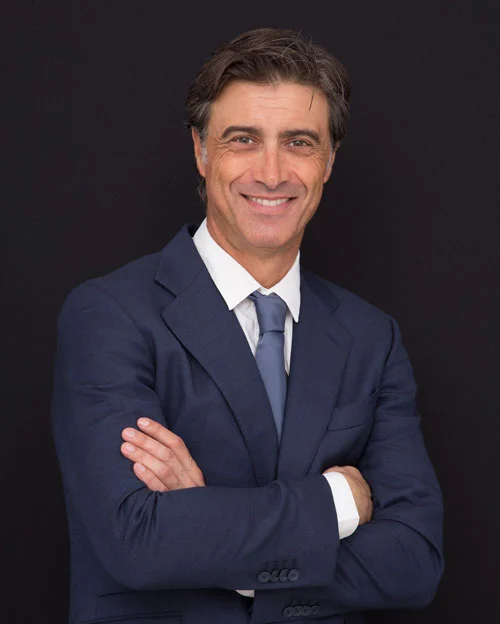
Your surgeon
Plastic surgeon in Alicante, focused on facial, breast and body surgery. He sees you personally at the first consultation, during surgery and at every follow-up.
“Every procedure is unique. My commitment is to combine advanced technique with sound medical judgement, with one clear aim: natural results in harmony with your face and body.”

Clinic at Carrer de Velázquez, 2, 03560 El Campello (Alicante)
You may also be interested in
Corrects excess eyelid skin and under-eye bags for a more rested look.
Repositions the tissues of the face and neck once sagging has become noticeable.