
Facial surgery in Alicante
Reshaping the cartilage of prominent or sticking-out ears so that they sit closer to the head, with a more natural fold. It is done through a small incision behind the ear, in children from the age of 5 or 6 and in adults.
Anaesthesia
Local with sedation or general
Duration
Around 1 hour
Hospital stay
Day case
Age
From 5 or 6 years
Back to your routine
Within a few days
Full recovery
Within a few weeks
Approximate figures. They are confirmed at your consultation for each case.
The technique
Otoplasty is surgery that reshapes the ear. It is most often used to correct prominent or sticking-out ears, which stand too far away from the head, almost always because the natural fold of the cartilage (the antihelix) is missing or the concha (the hollow of the ear) is very deep.
Access is through a small incision behind the ear, which is hidden in the crease. Through it, the cartilage is shaped, weakening it with rasping techniques so that it folds, and the new shape is secured with internal stitches. Sometimes a small piece of cartilage is removed from the concha to bring the ear closer to the head without forcing its shape. In some cases the size of the ear can also be reduced or the earlobe corrected.
By that age the ear has almost reached its adult size, so surgery does not interfere with its growth. Having the operation in the first years of school, if the child sees it as a problem, can spare them teasing and self-consciousness. In adults it can be done at any age.

Suitability
In children, it is important that the child is the one who sees it as a problem and that they can cooperate with the aftercare. Complex ear malformations require a different assessment.
If what concerns you is a very minor detail, the change may not be worth having surgery. Dr Navarro will tell you clearly at your consultation.
Before you decide
Every ear has its own shape, and surgery is planned according to the reason it sticks out. At your first consultation you are seen personally by Dr Navarro; if the patient is a child, the consultation is held with the child and their family.
01
What bothers you about your ears, or your son’s or daughter’s, and how it affects day-to-day life.
02
The shape of the cartilage, the antihelix fold, the depth of the concha, the earlobe and the symmetry between the two ears.
03
Which technique Dr Navarro recommends, which anaesthesia will be used depending on age and how to look after the dressing.
04
You take the information away in writing, with the quote and the risks. You can ask about anything you are unsure of before you decide.
On the day of surgery
Before
Pre-operative tests adapted to the patient’s age and simple instructions for the days beforehand.
Start
In adults and teenagers, usually local anaesthesia with sedation. In children, the anaesthesia is chosen according to their age and their ability to cooperate.
During
Through the incision behind the ear, the cartilage is shaped and secured with internal stitches. The procedure takes around an hour.
Finish
The incision is closed with fine stitches and a light dressing is placed around the ears. The patient goes home the same day.
Afterwards
Days 1 to 3
Mild discomfort and swelling, controlled with the prescribed medication. It is best to sleep on your back with your head slightly raised.
First week
Follow-up appointment at the clinic. The dressing is replaced with an elastic headband that protects the ears.
A few days
Most patients return to school or work within a few days. Contact sports and knocks to the ear should be avoided for several weeks.
First few weeks
The headband is still worn, especially at night, while the new shape of the cartilage sets.
Within a few weeks
The change can be seen as soon as the dressing is removed, and full recovery comes within a few weeks as the swelling goes down.
Important information
Like any surgery, otoplasty carries risks. They are uncommon, but it is important to know about them before you decide:
Dr Navarro will go through them with you at your consultation, and they will be set out in the informed consent form.
Common questions
Usually from the age of 5 or 6, when the ear has almost reached its adult size. In adults there is no age limit.
It depends on the child’s age and how well they can cooperate. In adults and teenagers, local anaesthesia with sedation is usually enough; younger children may need a general anaesthetic.
It sits behind the ear, in the crease where the ear joins the head, and is usually barely visible over time.
Rather than pain, there is discomfort and pressure for the first few days, which is controlled with standard painkillers. Severe pain in one ear must be reported straight away.
Most patients return to their usual activities within a few days. Contact sports are put off for several weeks.
In most cases, yes. In some cases the ear may move away slightly over time and need a small revision procedure.
It depends on what needs correcting in each ear. The quote is confirmed after your first consultation.
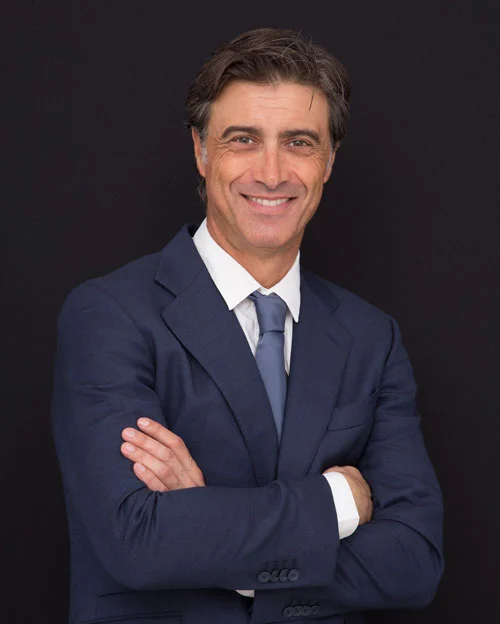
Your surgeon
Plastic surgeon in Alicante, focused on facial, breast and body surgery. He sees you personally at the first consultation, during surgery and at every follow-up.
“Every procedure is unique. My commitment is to combine advanced technique with sound medical judgement, with one clear aim: natural results in harmony with your face and body.”

Clinic at Carrer de Velázquez, 2, 03560 El Campello (Alicante)
You may also be interested in

Reshapes the nasal bones with an ultrasonic instrument, giving more control than a hammer and chisel.
Corrects excess eyelid skin and under-eye bags for a more rested look.