
Breast surgery in Alicante
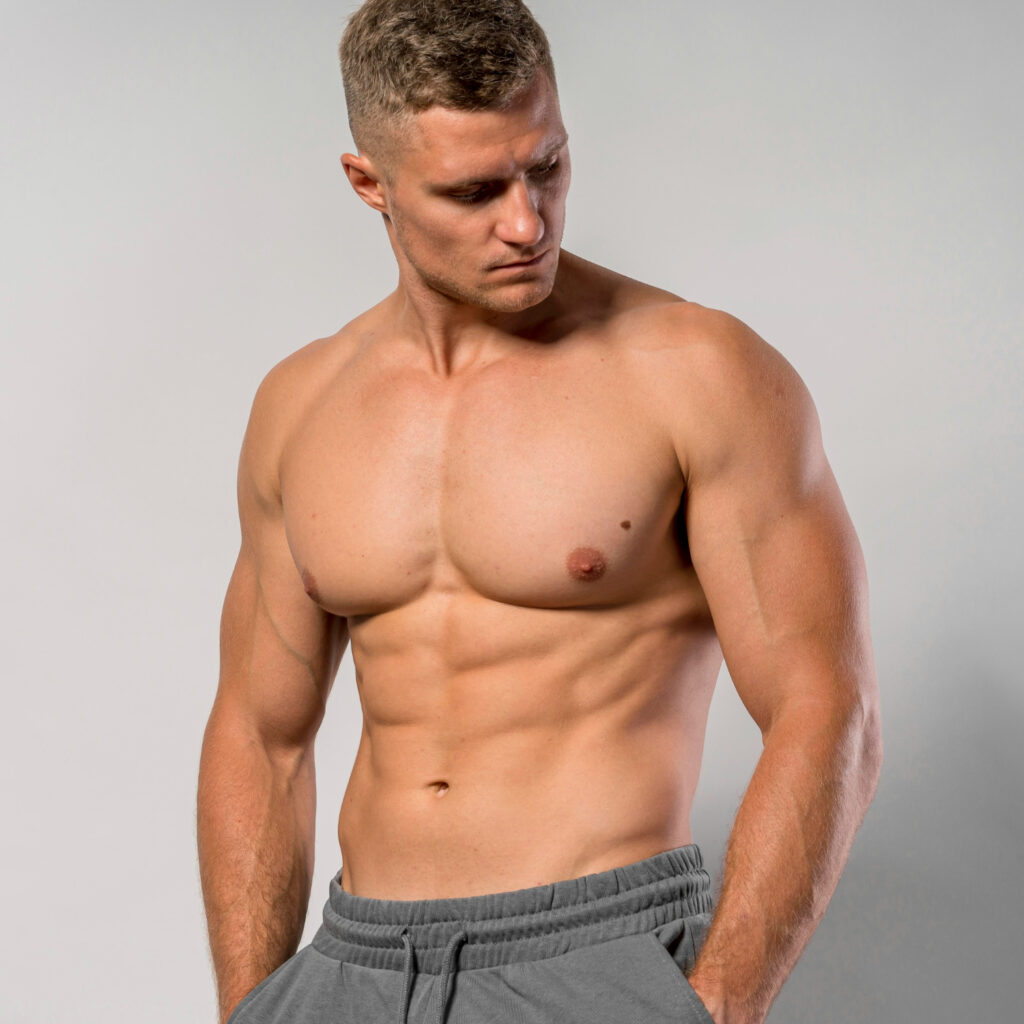
Correcting enlarged breasts in men by removing excess glandular tissue and, where present, built-up fat, for a flatter chest. Before surgery, Dr Navarro assesses the type of gynaecomastia and rules out causes that should be treated differently.
Anaesthesia
General or local with sedation
Duration
1 to 2 hours
Hospital stay
Usually a day case
Compression garment
Around 4 weeks
Back to work
Around 1 week
Final result
Between 3 and 6 months
Approximate figures. They are confirmed at your consultation for each case.
The technique
Gynaecomastia is the enlargement of glandular breast tissue in men. It is usually linked to an imbalance between oestrogen and testosterone, and it can affect both breasts or just one, sometimes unevenly.
Not every enlarged male chest is gynaecomastia. There are three types: glandular, where the gland predominates and a firm disc can be felt beneath the areola; pseudogynaecomastia, where the volume is due to fat; and mixed, which combines both.
The usual treatment combines liposuction, to remove the fat, with excision of the glandular tissue, which liposuction does not remove. This is done through a small incision along the lower edge of the areola. When there is also excess skin, additional incisions may be needed.
Causes that need a different treatment have to be ruled out first: certain medicines, anabolic steroids, hormonal disorders or other illnesses. This is why blood tests or an ultrasound scan are sometimes requested before surgery is proposed.
Suitability
If the enlargement is caused by a medicine or a hormonal disorder, the first step is to treat the cause. In adolescence, gynaecomastia goes away on its own in many cases, so it is usual to wait before operating. And if the volume is mainly fat, the first step is sometimes to lose weight.
At your consultation, Dr Navarro will tell you clearly whether surgery is the right option in your case.
Before you decide
To treat gynaecomastia properly, it is important to know what it is made of and why it has appeared. At your first consultation, Dr Navarro sees you personally and takes the time to understand your case.
01
How long you have noticed it, whether it has changed, what medicines or supplements you take and how it affects your daily life.
02
Examination of the chest to tell gland from fat and to assess any excess skin and the symmetry between the two sides.
03
If needed, hormone tests or an ultrasound scan, and coordination with your doctor or the relevant specialist.
04
You take the proposal home in writing, together with the quote and the risks. You can raise any questions before you decide.
On the day of surgery
Beforehand
Pre-operative tests and an assessment by the anaesthetist. Before surgery, with you standing, Dr Navarro marks the area to be treated.
Step one
Through incisions just a few millimetres long, fat is removed from the breast area and its edges, so that the transition with the rest of the chest is smooth.
Step two
Through an incision along the lower edge of the areola, the excess glandular tissue is removed, leaving a thin layer so that the areola does not look sunken. The tissue is sent for analysis.
To finish
The incisions are closed with fine stitches and a compression garment is fitted. In some cases a drain is left in for one or two days.
Afterwards
Days 1 to 3
Moderate discomfort and swelling, which are controlled with the prescribed medication. You should avoid straining with your arms.
Week 1
A follow-up appointment with Dr Navarro. Many patients return to work that is not physically demanding after around one week.
Weeks 1 to 4
You will wear the compression garment for about four weeks, as Dr Navarro advises, to help the skin adapt.
Weeks 4 to 6
You gradually return to exercise. Chest exercises and high-impact activities are usually left until last.
3 to 6 months
The swelling gradually goes down and the contour of the chest becomes more defined. The scar on the areola is usually barely visible.
Important information
Like any surgery, gynaecomastia surgery carries risks. Most are uncommon, but it is important to understand them before you decide:
There are also the risks associated with anaesthesia. Dr Navarro will go through them with you at your consultation, and they will be set out in the informed consent form.
Common questions
It is the enlargement of glandular breast tissue in men. It can affect one or both breasts and is more common than people tend to think.
Not exactly. If the volume is only fat, it is called pseudogynaecomastia; if there is glandular tissue, gynaecomastia; and if there is both, a mixed form. The treatment varies according to the type.
Fat can be reduced with exercise and diet, but glandular tissue cannot. That is why surgery is usually needed when there is glandular tissue.
Only if the volume is fat. If there is glandular tissue, it has to be removed directly, because liposuction alone does not remove it.
The incision is made along the lower edge of the areola, where the skin colour changes, and over time it usually becomes barely visible. The liposuction incisions are just a few millimetres long.
The glandular tissue removed does not grow back, but if the cause persists (certain medicines, anabolic steroids or weight gain), the chest can enlarge again.
Gradually from around 4 to 6 weeks, as Dr Navarro advises. Chest exercises are resumed last.
It depends on the type of gynaecomastia and whether there is excess skin. You will receive a personalised quote after your first consultation.
Your surgeon
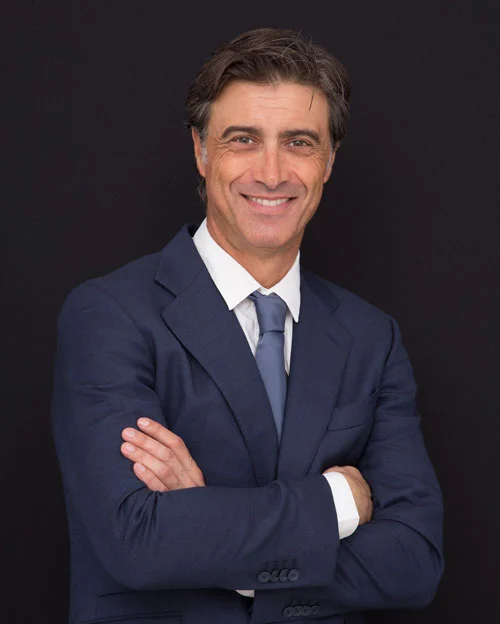
Plastic surgeon in Alicante, focused on facial, breast and body surgery. He sees you personally at the first consultation, during surgery and at every follow-up.
“Every procedure is unique. My commitment is to combine advanced technique with sound medical judgement, with one clear aim: natural results in harmony with your face and body.”

Clinic at Carrer de Velázquez, 2, 03560 El Campello (Alicante)
You may also be interested in
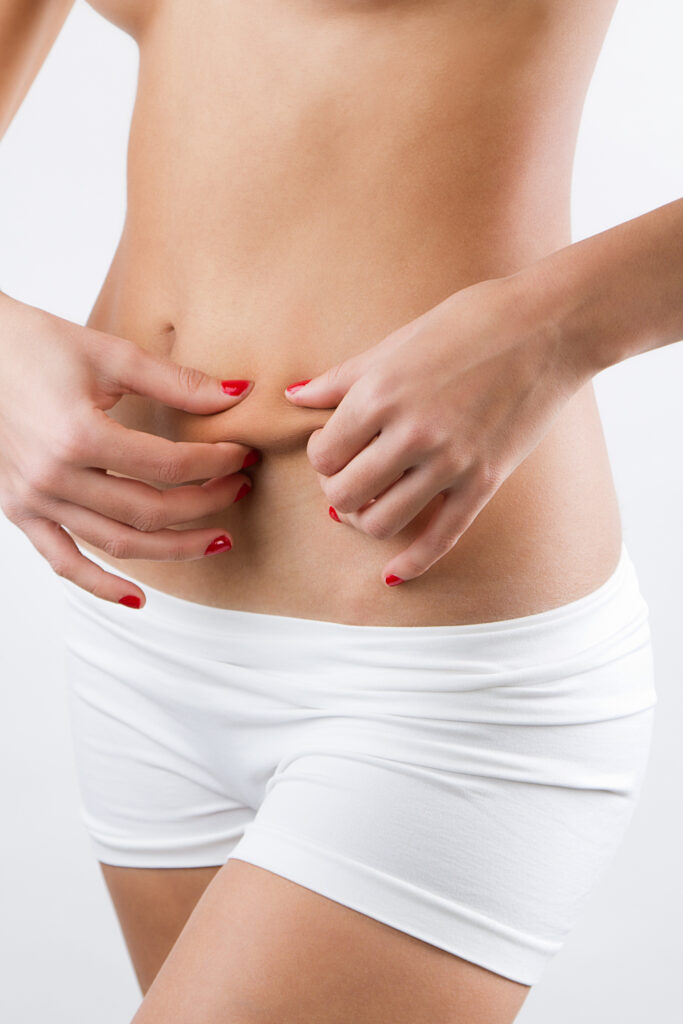
Removes excess abdominal skin and, when needed, repairs the abdominal wall.

Corrects excess eyelid skin and under-eye bags for a more rested look.